CoVince
Launch app
What that stack costs bought the usual way — the cheapest tier of each tool, one line at a time — against what the same seventeen cost here. The list they come from is further down, and you can untick whatever you do not use.
You do not pick a tool first. You start with what you want to achieve — and every tool is already on it.




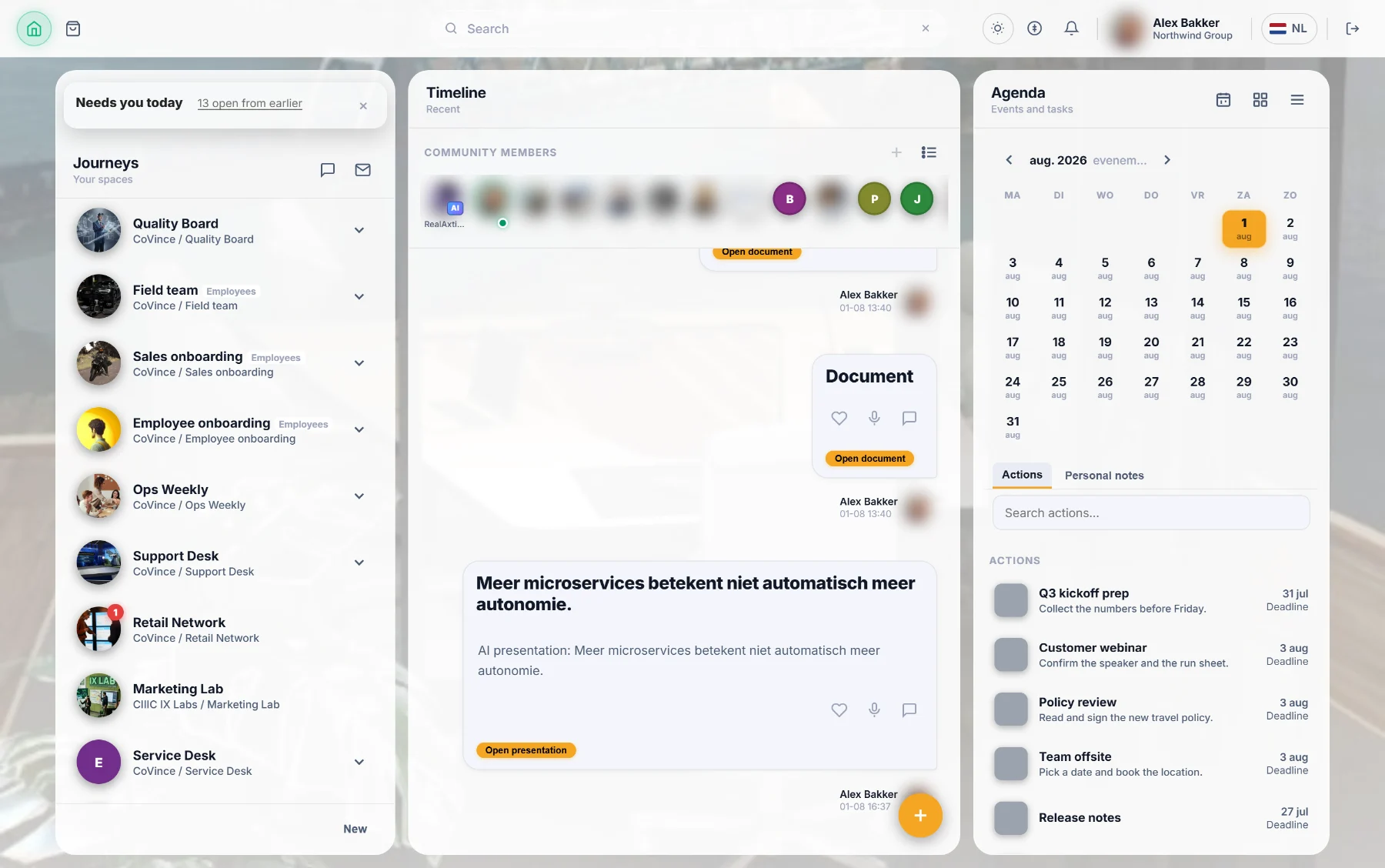
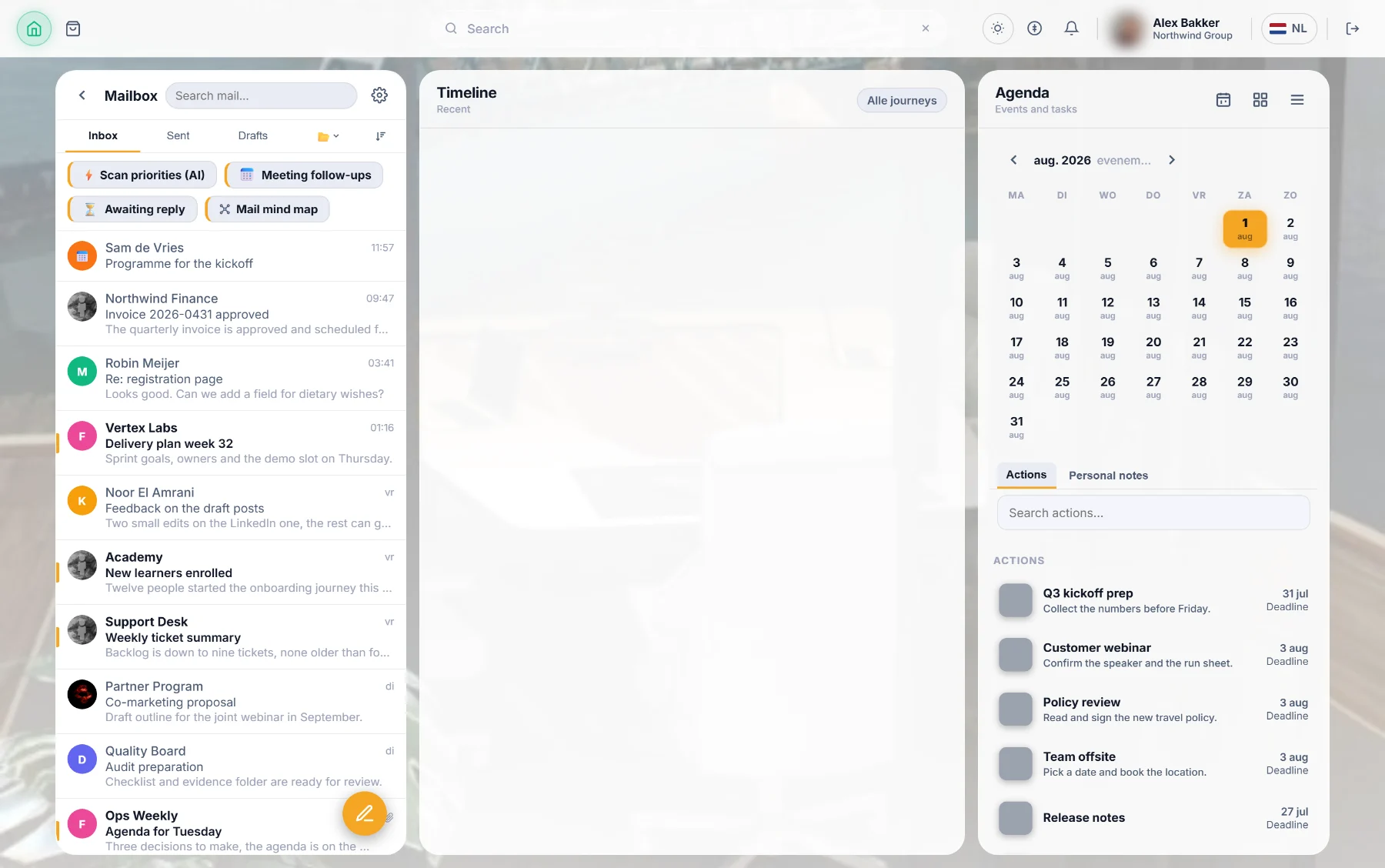
The workflow, the reading, the first meetings, the account, the questions they ask in week one — all hanging on one object instead of scattered over seventeen apps.
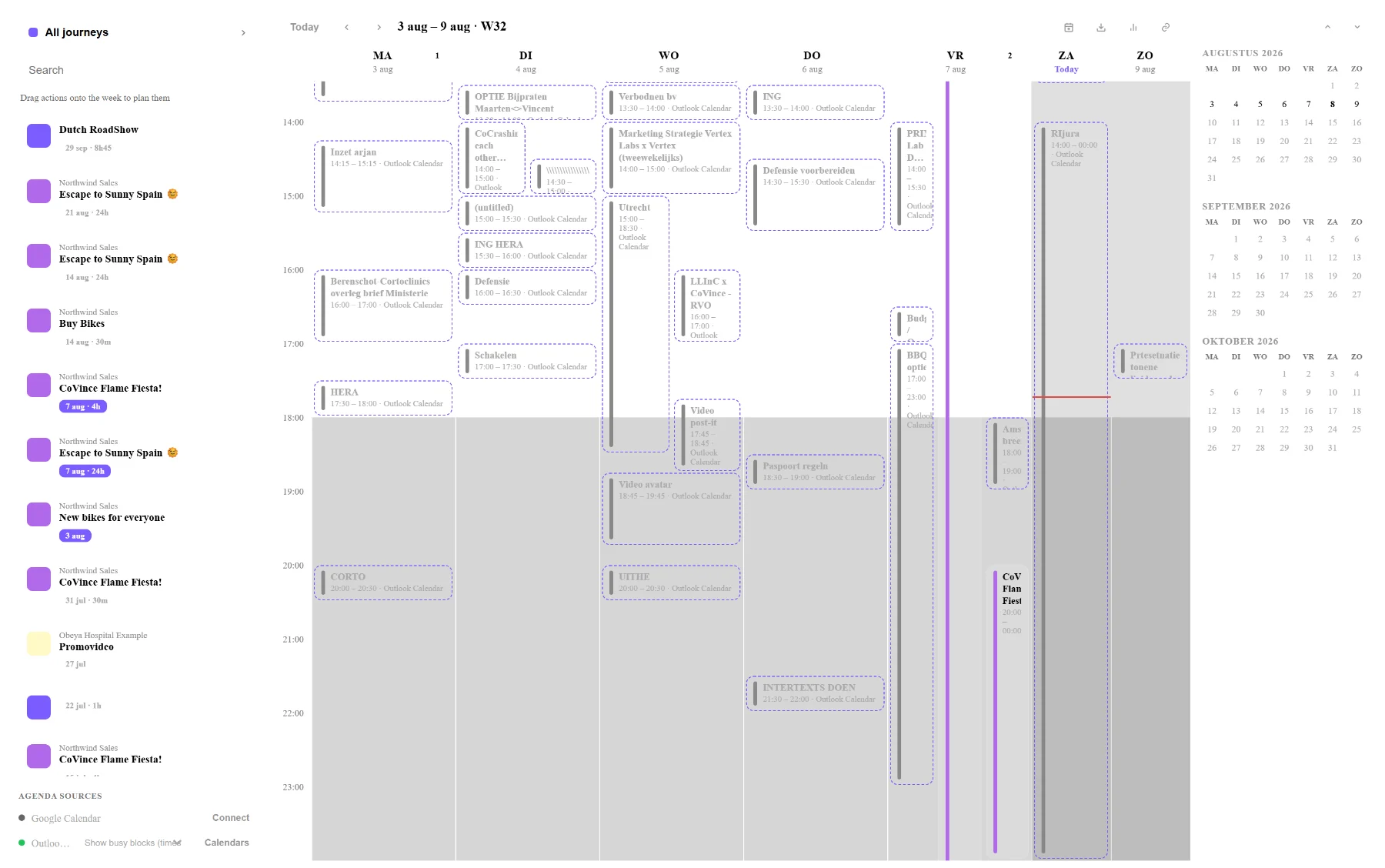
The board where it was decided, the actions it produced, the documents behind them and the report on top. Nothing has to be linked, because nothing was ever apart.
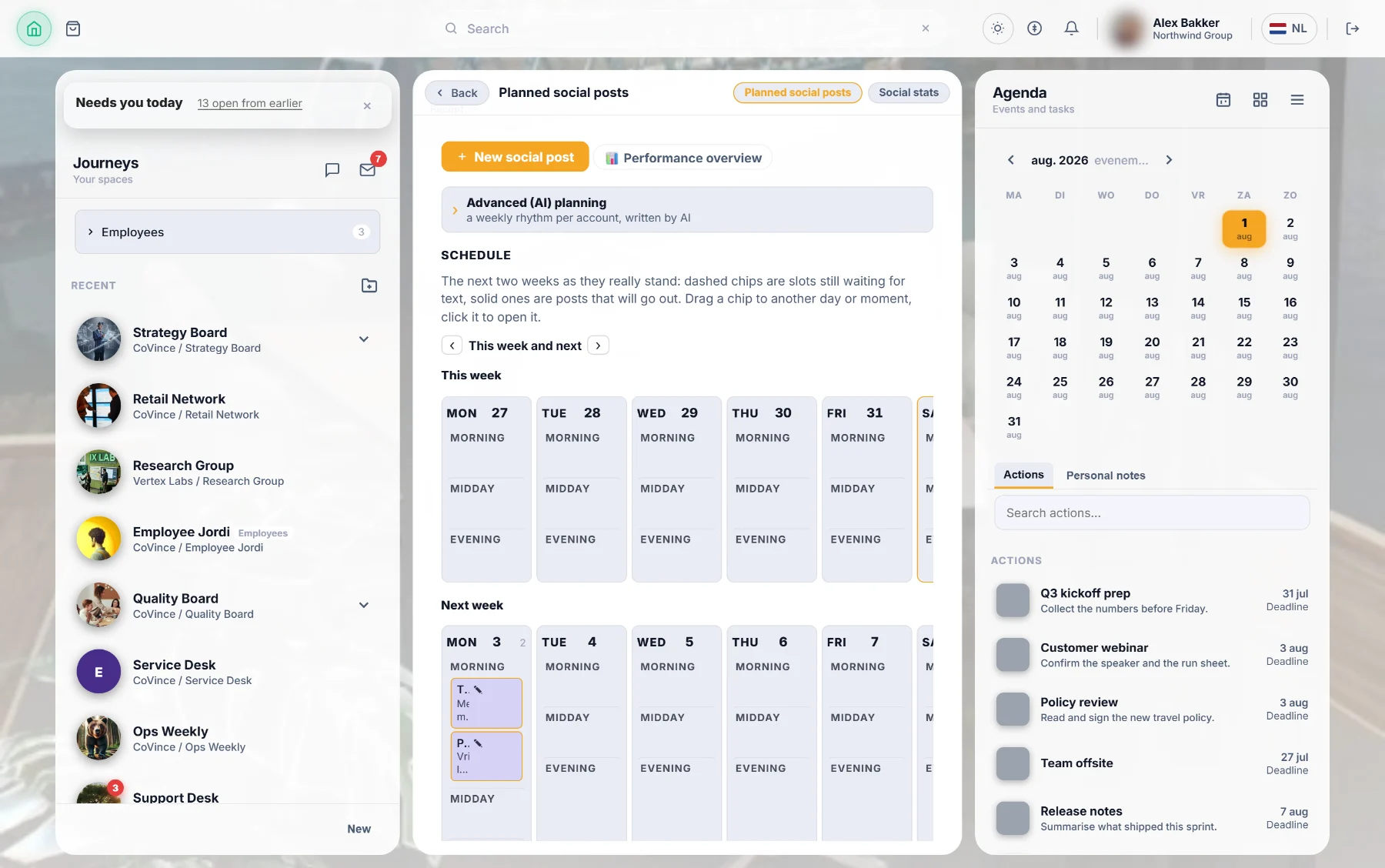
Images, posts, planning, the landing page, the mail and the reach — one object, one place, no export in the middle of it.
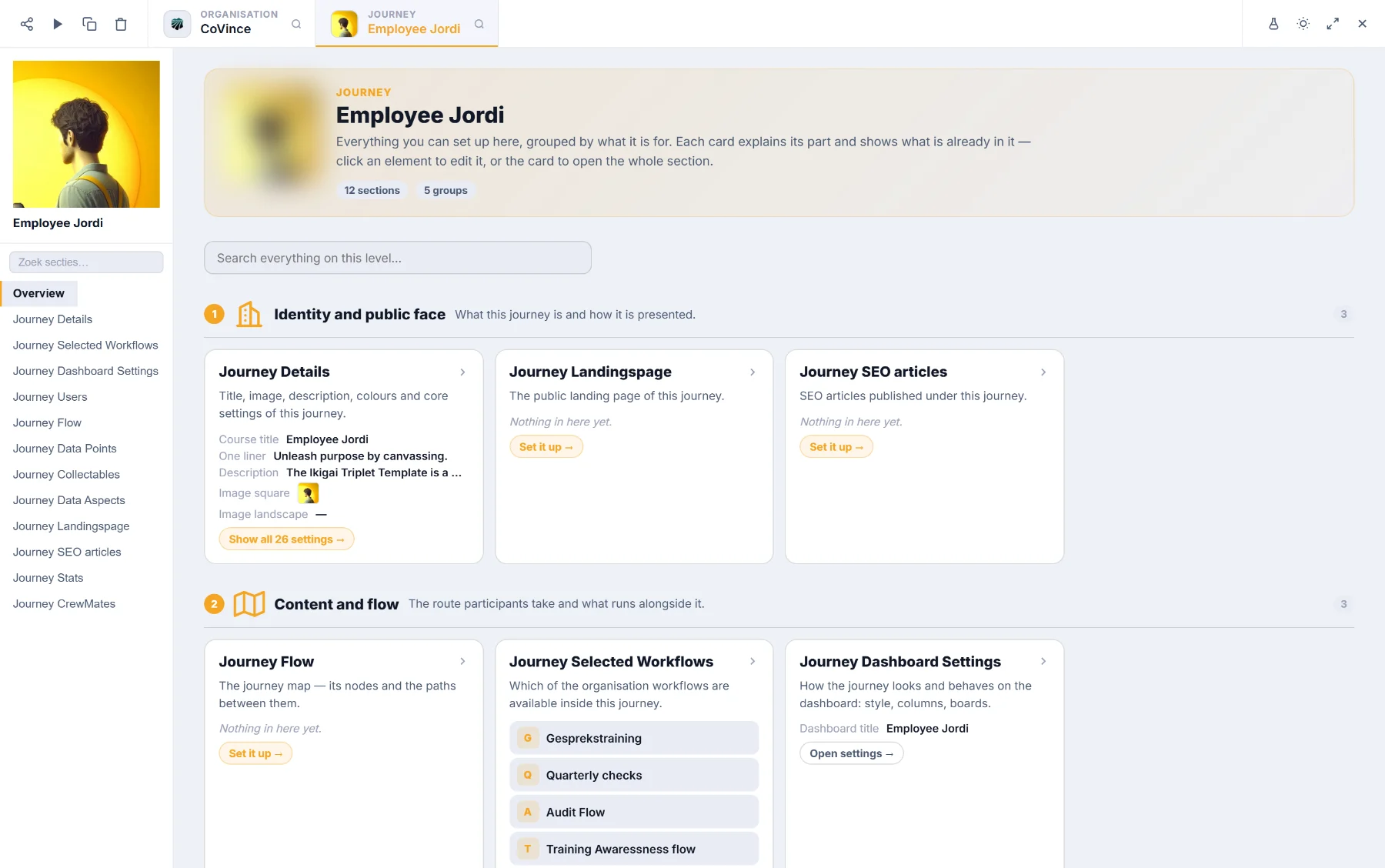
The journey, the materials, the sessions, the questions asked, the progress per person and the certificate at the end.
Here they are one licence, on one set of people, journeys and data. This is the list — and what each of them costs on its own.
We researched the market and picked the cheapest credible tool in every category — annual billing, entry tier, no add-ons. This is the best case for the competition. Untick anything you do not use and it drops out of the sum below.
| Category | Cheapest tool | Price / month | Runner-up | |
|---|---|---|---|---|
| Your stack — 17 of 17 tools, 1 user | €222 | €222 for all 17 | ||
Drag the slider. Per-seat tools scale with your team, flat-rate tools are counted once — over the 17 tools you left ticked above.
Seventeen vendors means seventeen contracts, seventeen user administrations, seventeen places where customer data lives — and an integration bill nobody budgets for.
Your people, the work itself, the growing — and the ground the other three stand on.
Together is really two words, and they are the two halves of this platform: people grow, and everything they need gathers in one place. Below, all 17 tools in four groups — your people, the work, the growing, and the ground it all stands on — no modules to unlock, no per-feature upsell. Hit Start on any card and the platform opens straight at that tool.
A goal is not one screen — it runs from first idea to evaluation. The platform knows where you are in that run and puts the right tool in front of you. Pick a case:
Separate tools force you to export, import and re-type the same people and content all day. Here one record travels through every module — and it stays inside your workspace.
Reuse means your modules share one source of truth. It never means your data leaves your workspace.
A CrewMate is not welded to one vendor. You choose what it thinks with — and that can be a model running on your own machine or your own server, so the prompt, the documents and the answer never cross your network boundary.
Nothing is sent to an outside API. The material a legal, HR or medical department would never let near a public model can still have an assistant on it.
Local where it is sensitive, hosted where speed matters more than secrecy. The choice is made per assistant, not once for the whole company.
Same chat, same workflows, same journeys. Where a CrewMate does its thinking is a setting, not a different product.
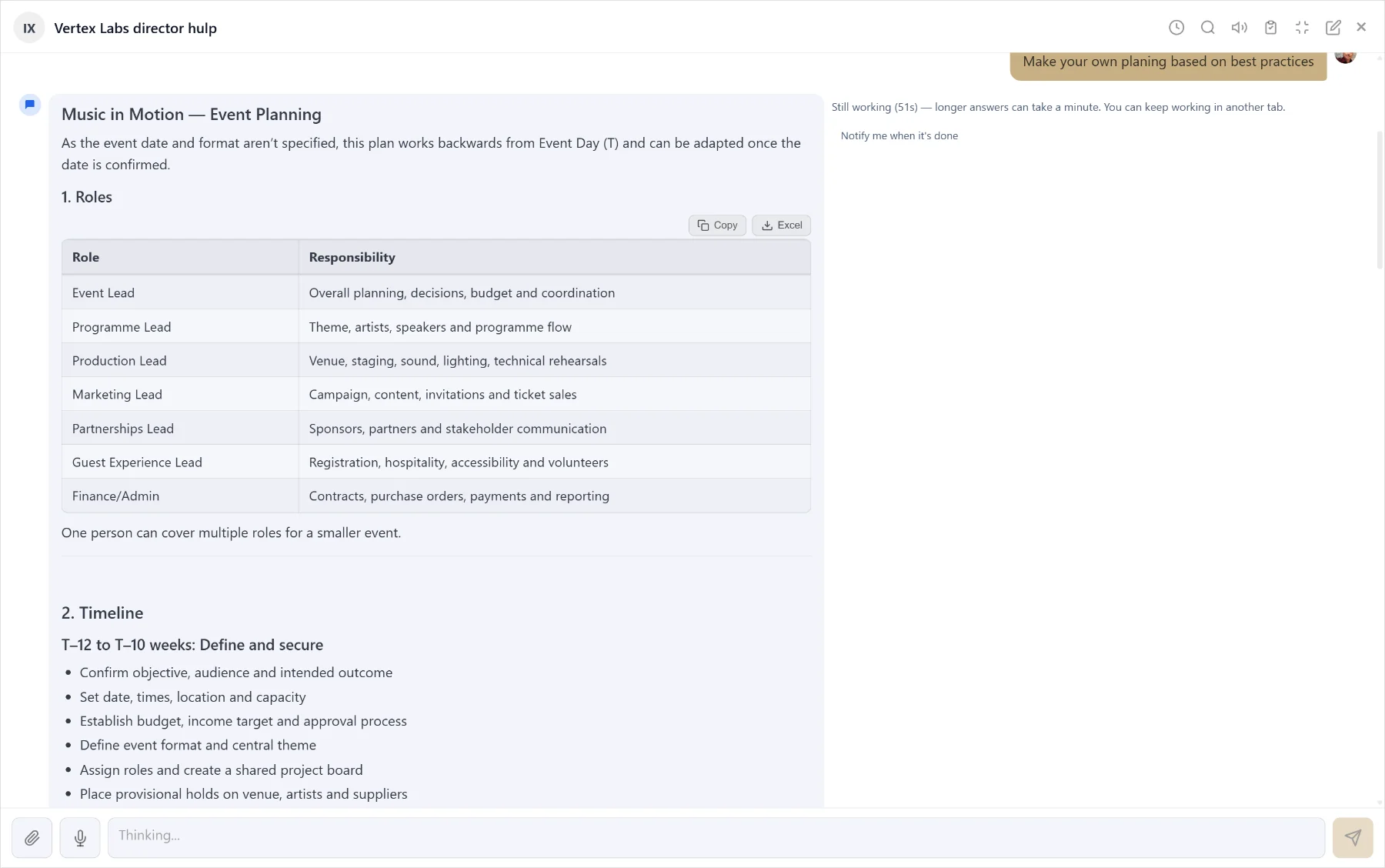
The AI is not a chat window bolted on the side. It sits inside the flows — building them, filling them, summarising them — because it can already see your workspace.
"I stopped counting the tabs. That is the whole review."
Marit · communications, 14 people
PeopleA month of posts, planned in one afternoon.
PeopleYour people, your brand, your data — not a rented feed.
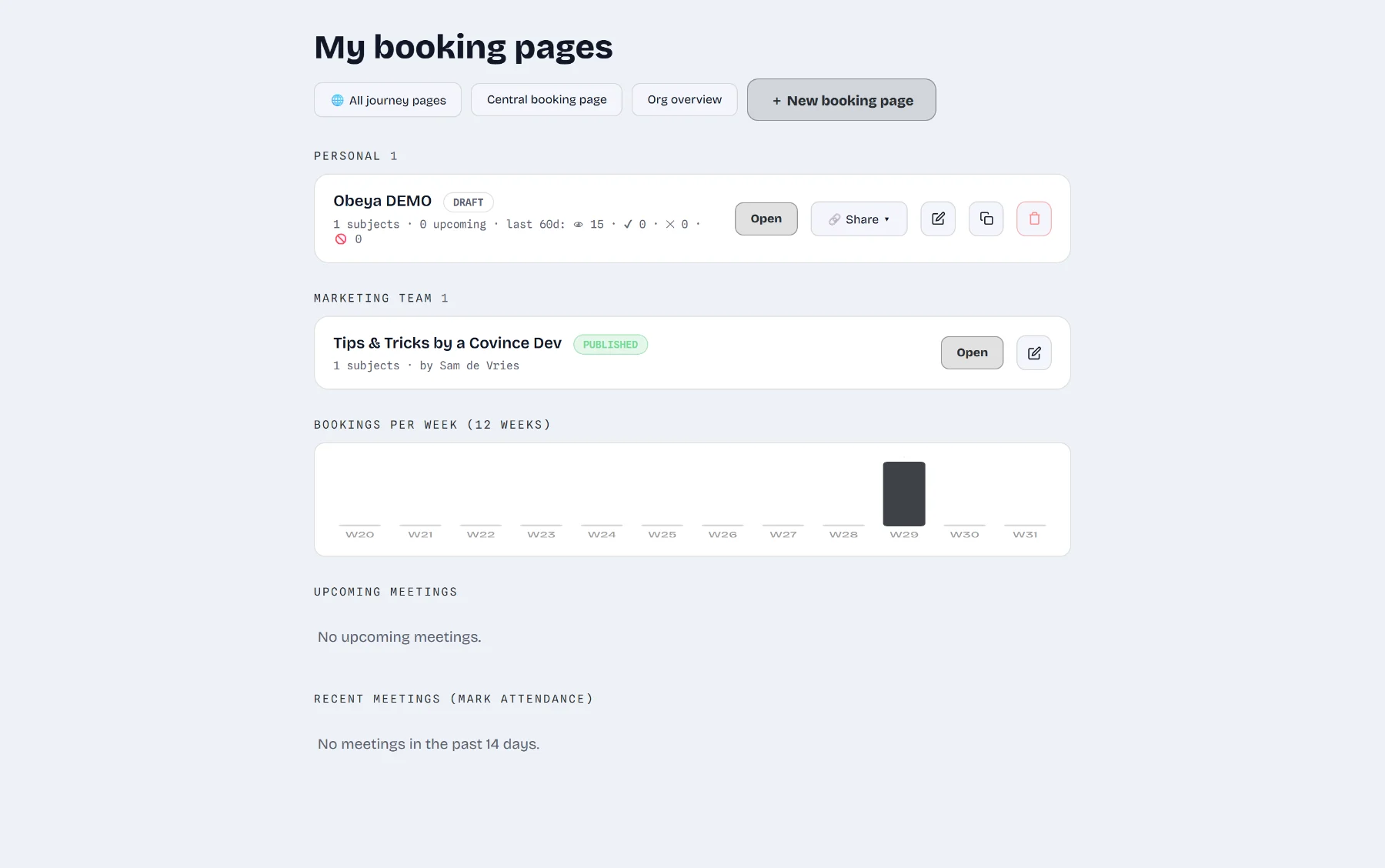
PeopleStop trading emails to find half an hour.
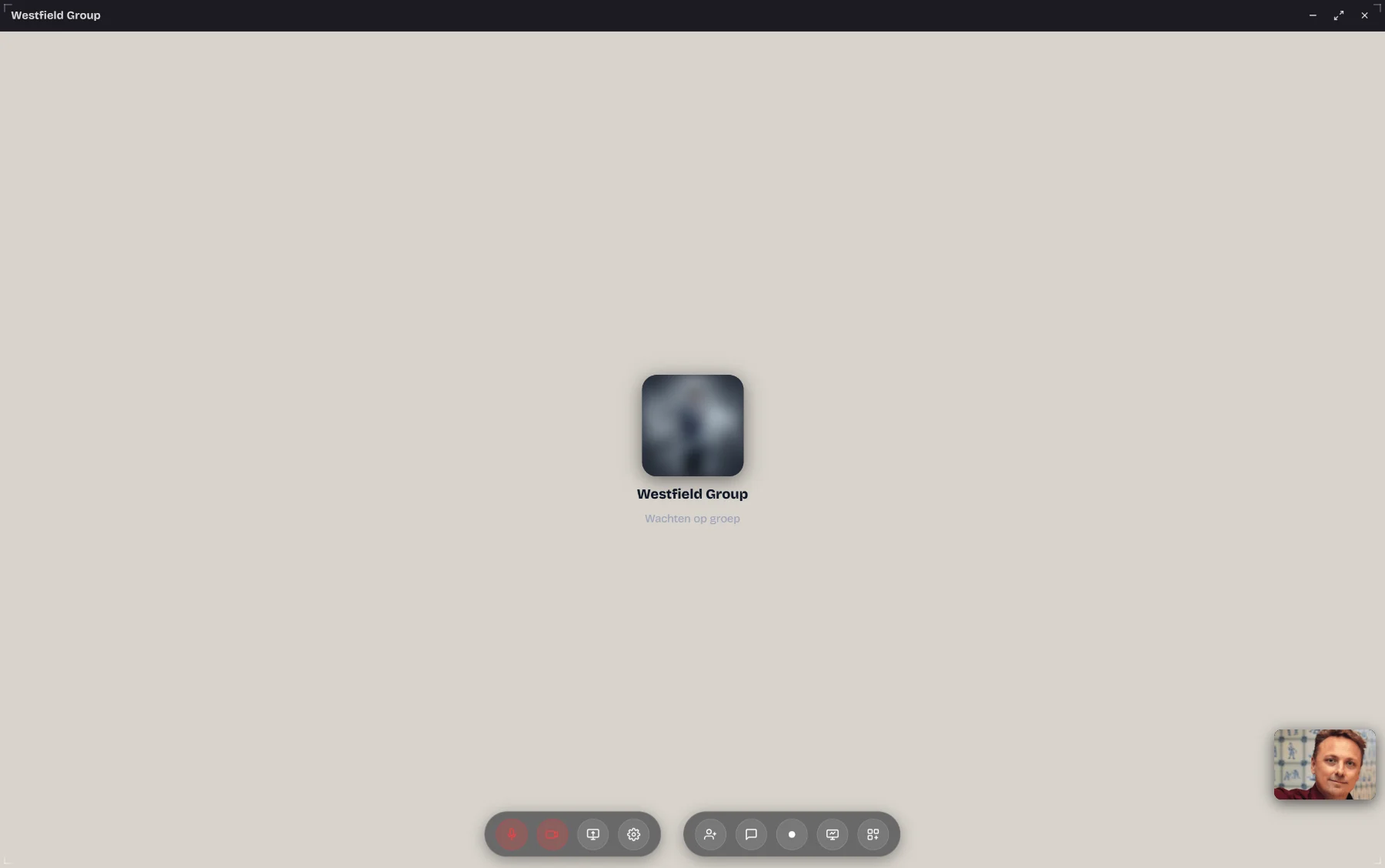
PeopleA call that leaves something behind.
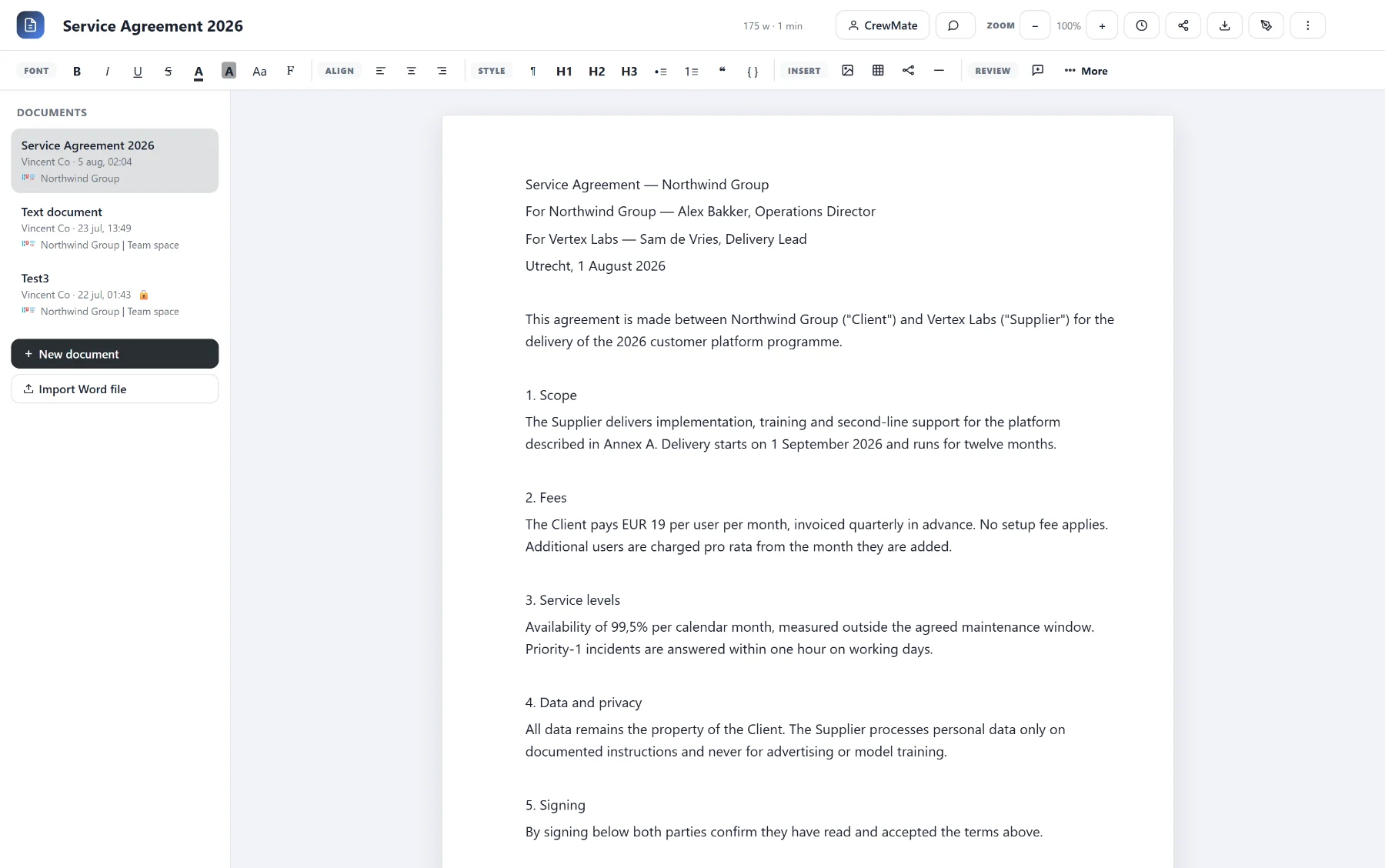
WorkWrite, calculate and present where the work already lives.
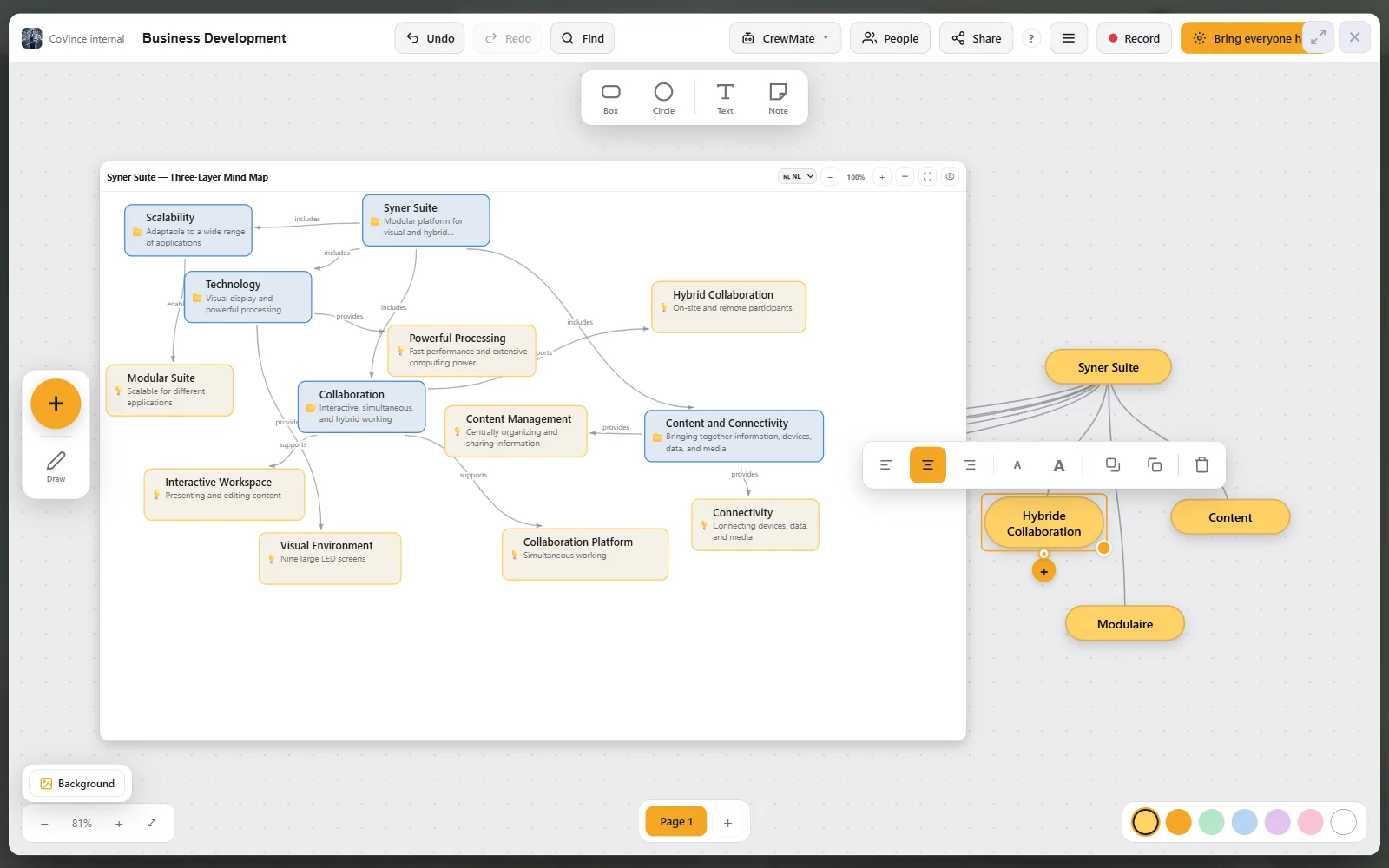
WorkThe board that turns into a plan.
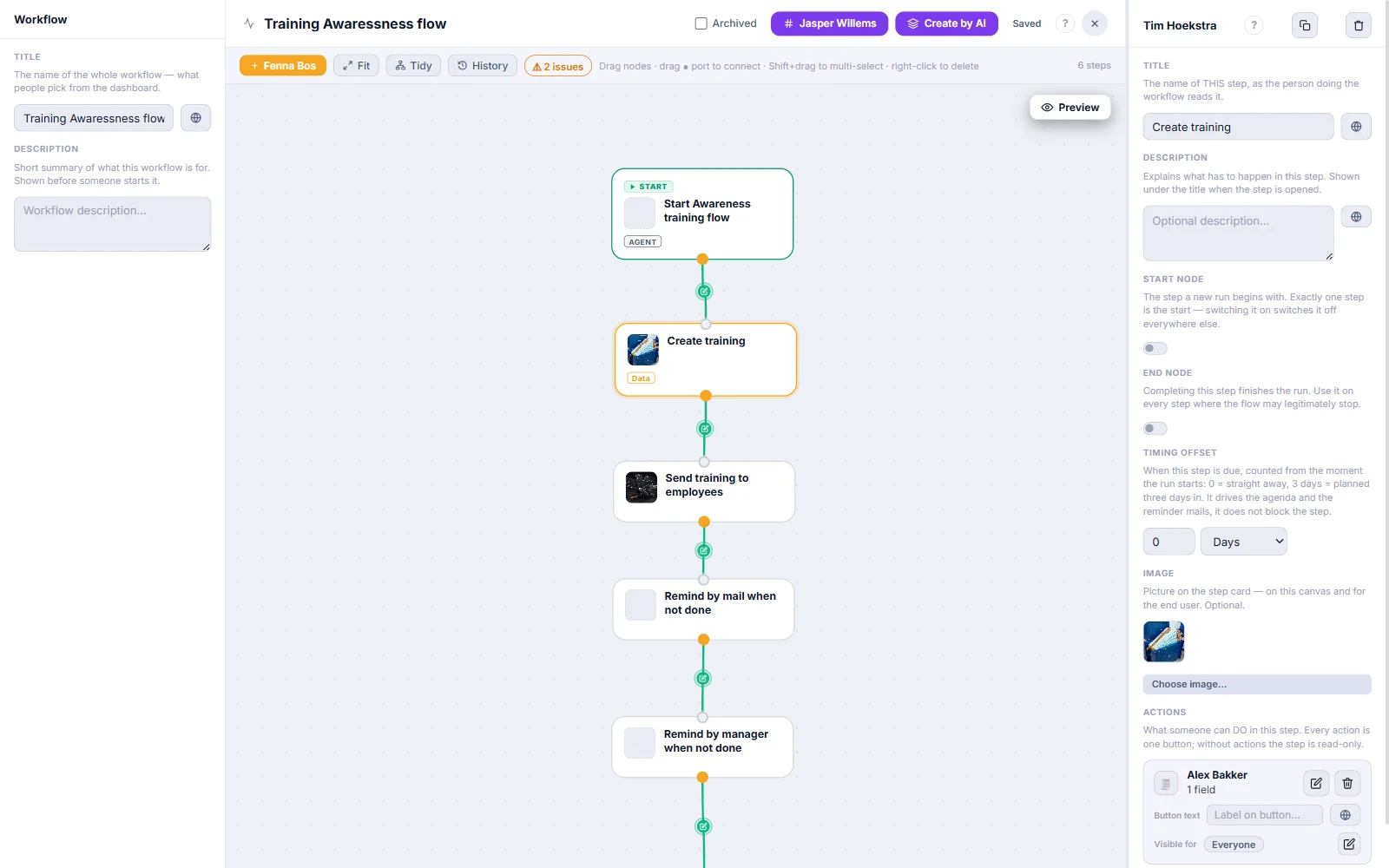
WorkThe steps everyone forgets, remembered by the system.
GrowthCourses that live next to the work, not in a separate school.
GrowthShow people the route, not just the vacancy.
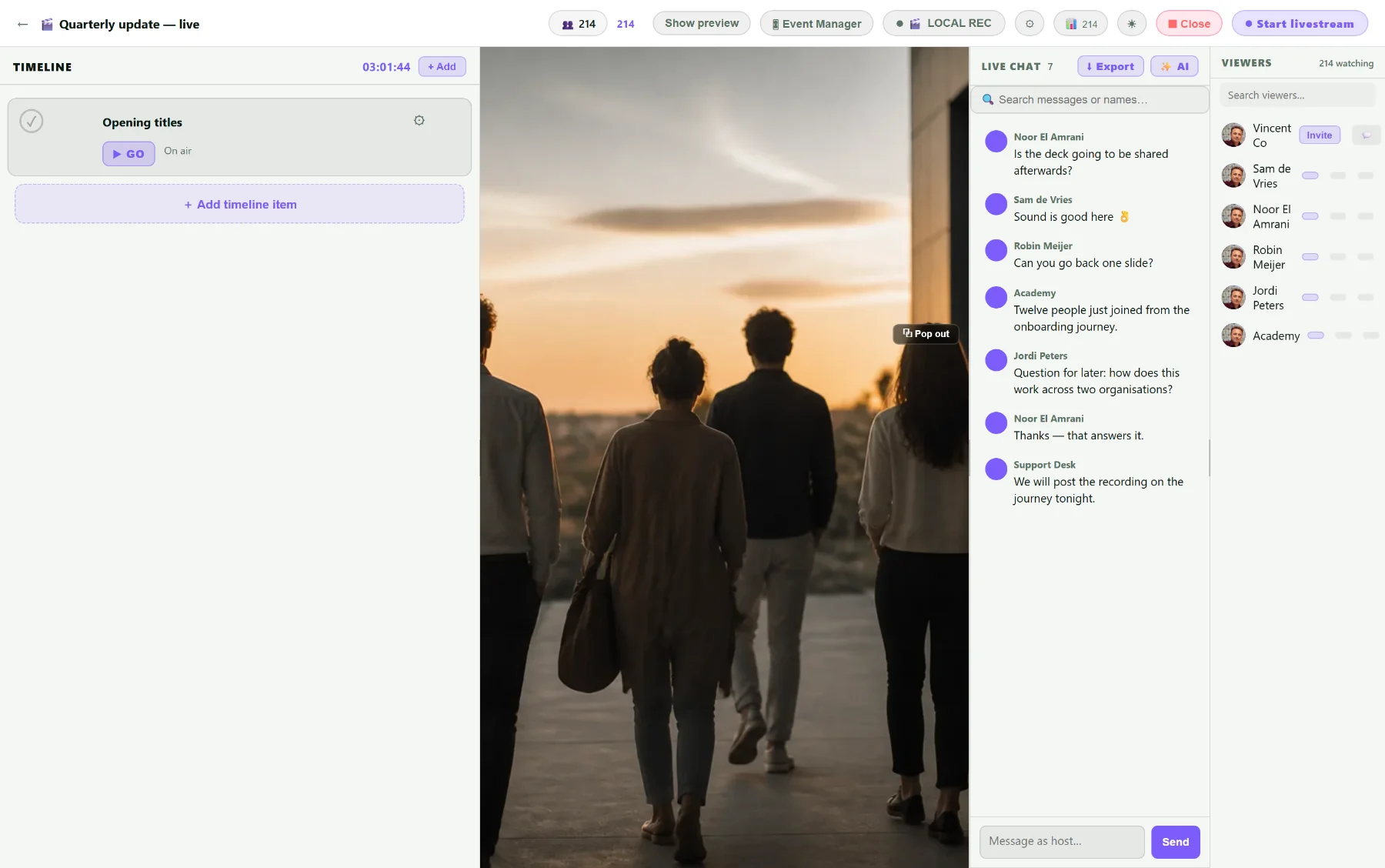
PeopleGo live to your people and your channels at once.
GrowthRecord a lesson properly, without a production day.
PeopleAsk, and get an answer you can act on.
WorkOne list, in the week it actually has to happen.
PeopleMail that knows what it is about.
GroundAn assistant that has seen your work, not just the internet.
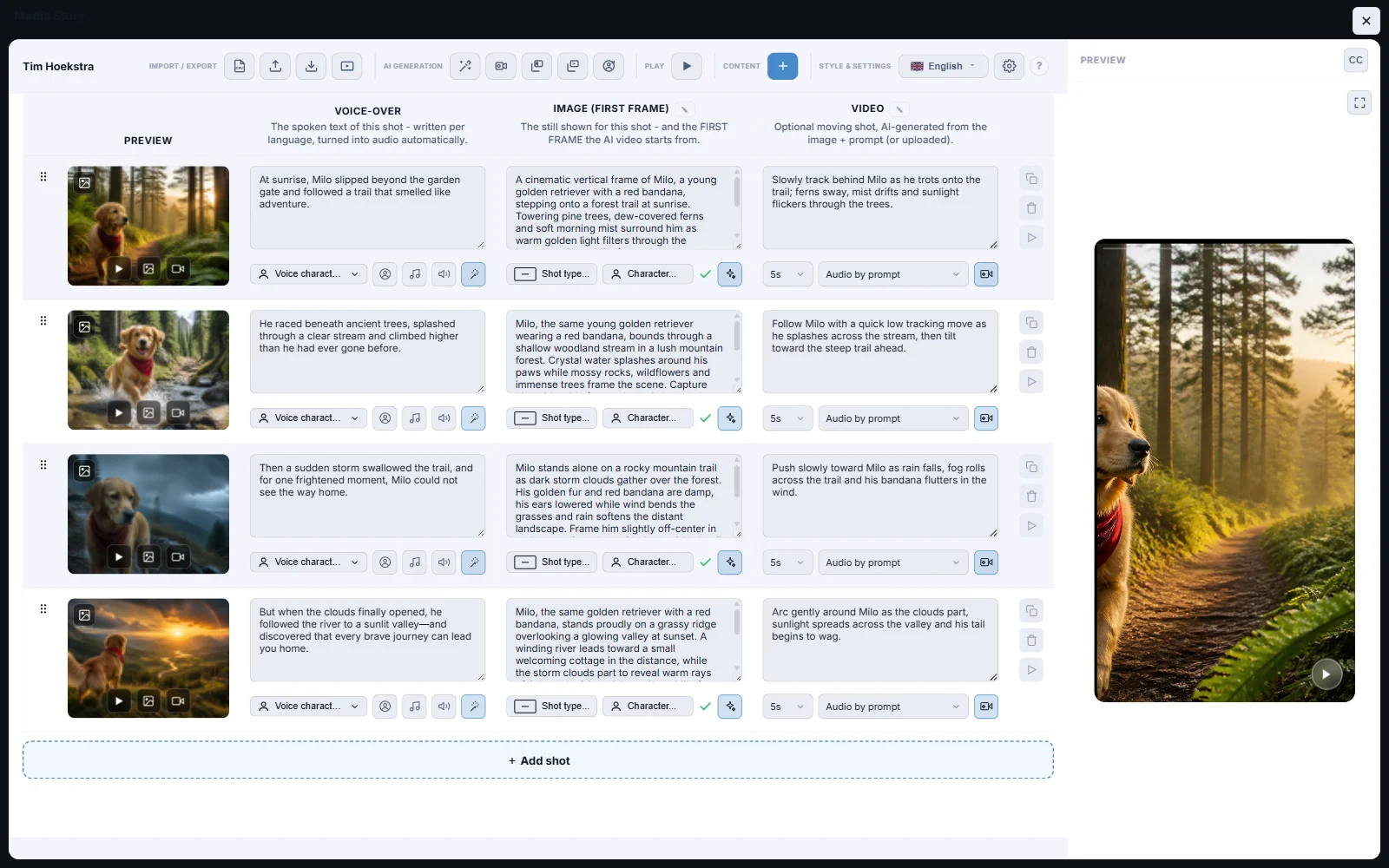
GroundA film from a paragraph, shot by shot.
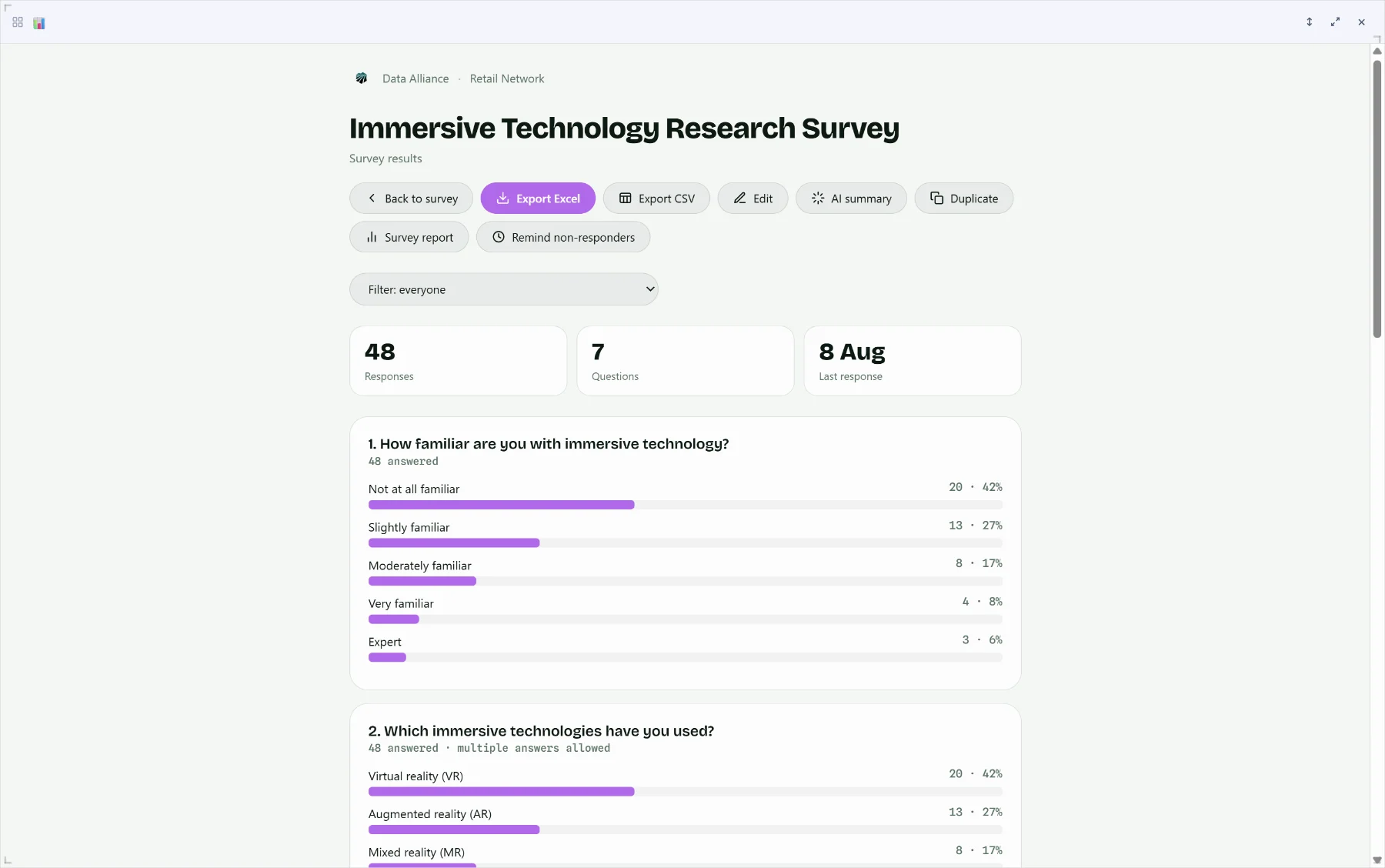
GroundNumbers about your own work, without a data project.
It is cheaper because it is one thing. Below, the same stack line by line — price, logins, contracts, and the hours nobody puts on an invoice.
Seventeen best-of-breed tools still do not know about each other. One platform does.
| 17 separate tools | CoVince | |
|---|---|---|
| One login for the whole team | 17 accounts | Yes |
| One invoice, one contract | 17 invoices | Yes |
| One GDPR processing agreement | 17 DPAs | Yes |
| Booking knows who your community member is | Manual export | Native |
| Social post reuses your course media | Copy & paste | Native |
| AI assistant sees all your content | Per-tool silo | Whole workspace |
| Re-typing the same person in every tool | Every time | Never |
| Your data used for ads or model training | Check 14 policies | Never |
| One reporting layer over everything | Extra BI licence | Included |
| Onboarding a new colleague | 17 invites | One click |
| Price when you grow | Tier jumps per tool | Still €19 |
Together is really two words. People grow — on the job, in the middle of the work, not on a course day in a hotel. And everything they need gathers in one place, on one record, instead of scattering over seventeen apps. That is the whole platform in one line. Three scales:
The course is where the work is. You learn a thing on Tuesday and use it on Wednesday, on the same journey — not in a portal you log into twice a year.
What one person figures out becomes the thing the next person reads. Questions, answers and material stay on the journey instead of in someone's head.
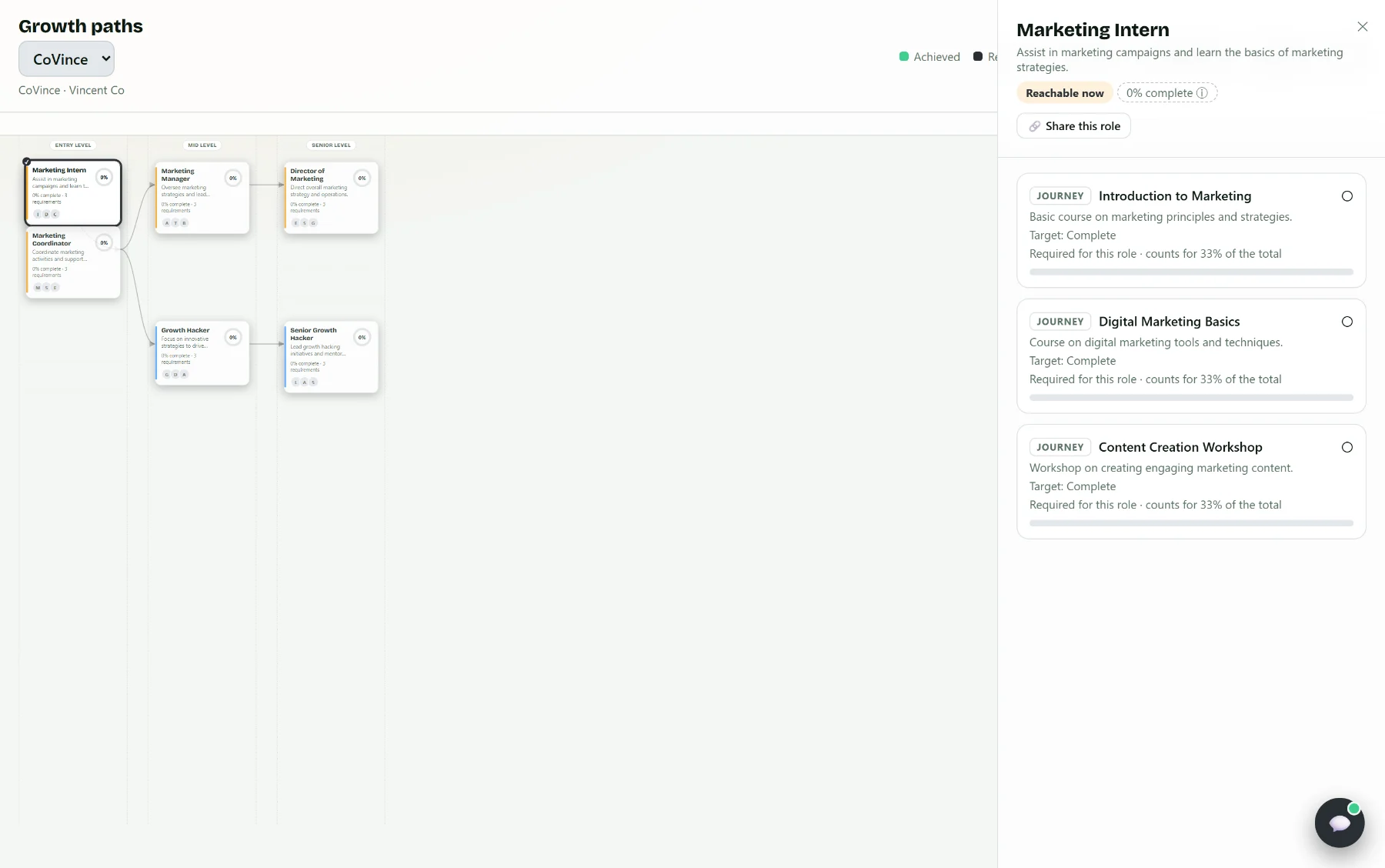
Roles, growth paths and the routes between them are visible to everyone. People can see where they can go — and what the next step actually asks of them.
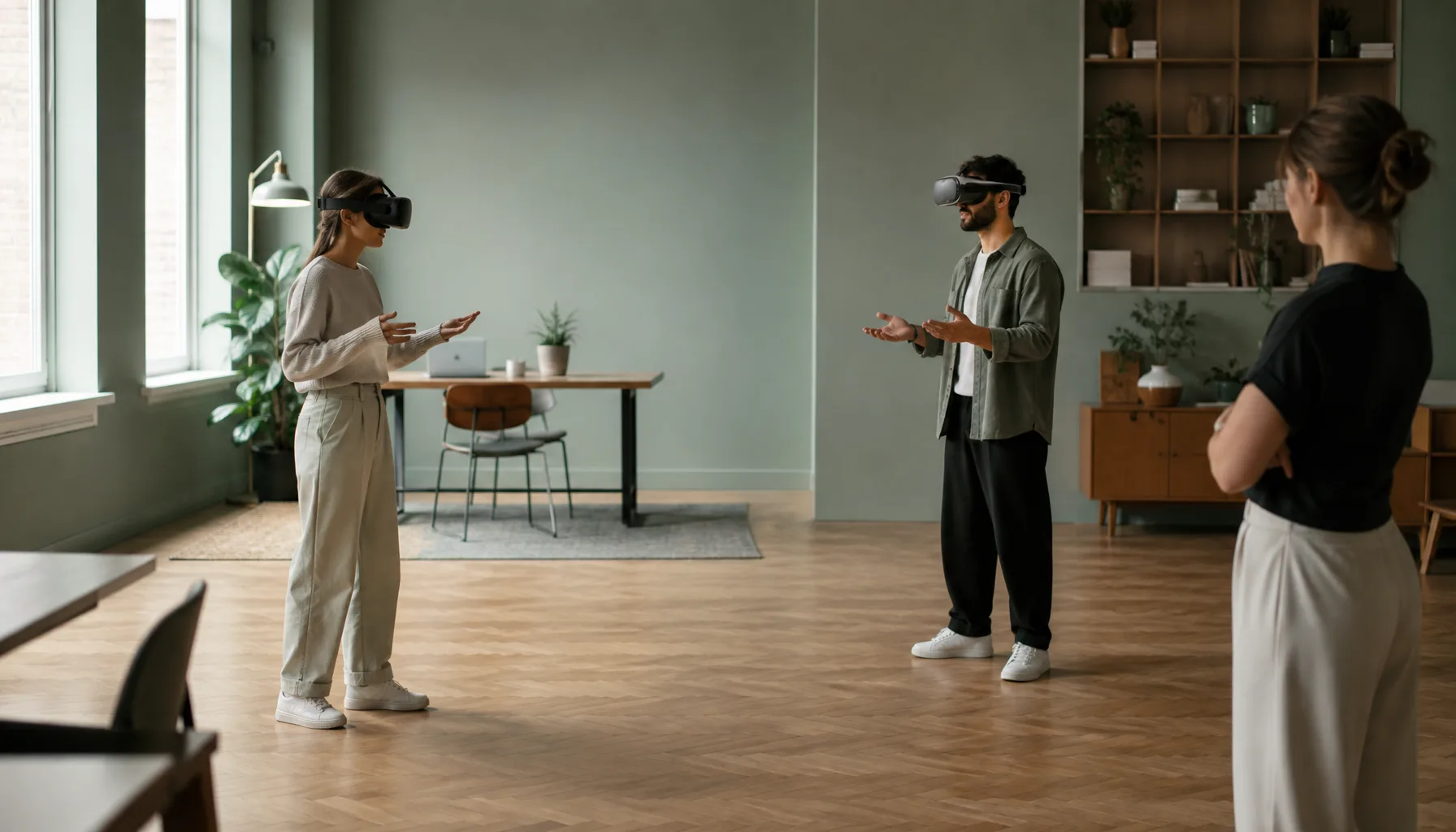
Everything on this page also runs in an immersive room: nine screens in a U around you, or a headset — a space where the walls are the interface and the team is inside the work instead of around it. Same platform, same data, more presence.
A monitor asks one person to look at one thing. A room asks a group to stand inside it, turn their heads and point — which is how people understand something together, and why the session in the room is the one still remembered in March.
A workshop where forty people can see the same plan, move the same cards and be counted in the same session. Scale is the point: the room holds a group, a screen holds a person.
Decisions, boards and actions land on the journey the moment they are made — so the day after is not a photograph of a whiteboard, and a VR scenario is not a separate system with its own progress.


The room can hold a full obeya: the plan, the strategic objectives, the performance wall and the improvement board, all up at once and all live. You walk between them and talk — and you can ask the data a question out loud instead of digging for the answer.
Three minutes inside a working obeya room — plan, performance and improvement walls, with the numbers answering back
17 tools, one licence, €19 per user per month.
Start for €19Everything your team plans, books, publishes, teaches and automates — in one platform, for €19 per user per month.